Warehouse Epoxy Flooring vs Every Other Option: A Straight Comparison
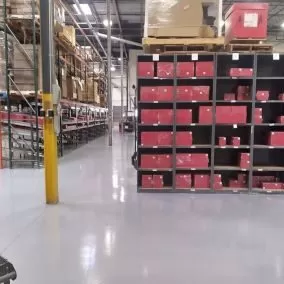
Facility managers evaluating flooring for distribution centers and warehouses often receive proposals involving multiple different floor types. Comparing them accurately requires understanding how each option performs under the specific conditions that warehouses create. Warehouse epoxy flooring consistently comes out ahead when the comparison is done on the terms that actually matter for industrial operations.
How Does Epoxy Compare to Bare or Sealed Concrete?
Bare concrete is the baseline that most warehouse operators start with. It's what most buildings deliver at construction completion, and many operators leave it unsealed for years before addressing its deficiencies. Sealed concrete, where a penetrating sealer is applied without a full epoxy system, is a step up but still falls significantly short of industrial epoxy performance.
The differences are measurable across every relevant category. Bare and sealed concrete dust continuously as surface wear generates fine particles. Epoxy eliminates that dusting completely. Bare concrete absorbs chemical spills permanently. Epoxy contains them at the surface for complete cleanup. Bare concrete becomes slippery when wet. Textured epoxy maintains traction in wet conditions. Sealed concrete can't support durable floor markings. Epoxy does. The comparison isn't close.
How Does Epoxy Perform Against Vinyl Composition Tile?
Vinyl composition tile sees significant use in light commercial settings and some older warehouse facilities. It offers a somewhat more attractive appearance than bare concrete and provides modest surface protection. In a true warehouse environment, however, it fails the performance test in multiple ways.
Forklift loads stress tile edges, causing edge chipping and tile lifting over time. Heavy pallet racking legs create point load failures at individual tiles. Moisture gets under tiles through the grout lines, eventually compromising adhesion. The grout lines themselves accumulate contamination regardless of cleaning frequency. In a distribution center environment, these limitations mean VCT typically requires replacement within three to five years of installation. That replacement cycle, measured over a 20-year facility life, costs far more than a single quality epoxy installation.
What About Polished Concrete as an Alternative?
Polished concrete has gained significant attention as a warehouse floor option. It offers attractive aesthetics, genuine dust reduction compared to unsealed concrete, and reasonable durability for moderate use. For pure storage warehouses with lower forklift frequency, it can be an appropriate choice. In high-intensity distribution environments, its limitations become apparent.
Polished concrete provides limited chemical resistance. Spills of aggressive chemicals or battery electrolyte can stain and etch the surface in ways that can't be cleaned away. Its surface becomes significantly more slippery when wet than textured epoxy. And its anti-slip performance in dock areas or condensation-prone zones is inherently limited by its smooth surface character. For the most demanding warehouse environments, polished concrete is an inferior choice compared to properly specified epoxy.
Why Can't Regular Paint Be Used Instead of Epoxy?
This question comes up regularly, particularly from facility managers focused on minimizing upfront costs. Floor paint looks superficially similar to epoxy coating when freshly applied but is fundamentally different in chemistry and performance. Single-component floor paints have low solids content, minimal film thickness, and limited adhesion compared to properly installed two-component epoxy systems.
In a warehouse setting, paint on concrete fails within months. Forklift tires peel it up at the first major maneuver. Moisture pushes it off from below. Chemical exposure bleaches and lifts it. The low upfront cost of paint becomes extremely expensive when the total cost of repeated applications over several years is calculated against a single epoxy installation that lasts a decade or more.
How Does Epoxy Handle Joint Areas Better Than Alternatives?
Concrete joint treatment is a specific performance category where epoxy-associated systems demonstrate a clear advantage. Bare concrete joints are simply open gaps that accumulate contamination and suffer forklift edge impact. Caulk-filled joints fail quickly under forklift loads, compressing or cracking to leave the joint unprotected again within a few months.
Semi-rigid polyurea joint fillers, used as part of a complete warehouse epoxy flooring system, support joint edges under forklift loads while accommodating thermal movement. That semi-rigid performance characteristic is specifically engineered for warehouse slab conditions, and it's only available as part of a comprehensive industrial flooring approach.
What About Rubber or Anti-Fatigue Matting as an Alternative?
Rubber matting is sometimes proposed as a localized flooring solution for specific workstation areas within warehouses. For ergonomic purposes in stationary picking or packing positions, anti-fatigue matting does provide genuine worker comfort benefits. As a flooring system alternative for the broader warehouse floor, however, it fails completely.
Matting creates trip hazard edges, cannot be adequately sanitized in food distribution environments, deteriorates quickly under forklift traffic, and doesn't address the underlying concrete surface quality issues that create contamination and safety problems. It's a localized ergonomic supplement, not a warehouse flooring system. The comparison doesn't meaningfully apply.
How Does Epoxy's Light Reflectivity Compare to Other Floor Options?
On this specific attribute, polished concrete is the only meaningful competitor to epoxy. Both high-gloss polished concrete and high-gloss epoxy reflect ambient light significantly better than matte or textured alternatives. However, epoxy's reflectivity is maintained more easily over time. Polished concrete's gloss diminishes as the surface is scratched by forklift tires and cleaning equipment, requiring re-polishing to restore. Epoxy's topcoat maintains its reflective quality across a longer maintenance interval.
In a distribution center where improved floor-level illumination supports picking accuracy and safety, epoxy's durably maintained light reflectivity provides a more consistent operational benefit over time.
Conclusion
Warehouse epoxy flooring wins the comparison against every realistic alternative when evaluated on the criteria that matter for industrial operations: forklift traffic durability, chemical resistance, dust elimination, traction performance, floor marking capability, and long-term cost. No other commonly available flooring option delivers across all these categories simultaneously. For distribution centers and warehouses that take floor performance seriously, epoxy is the clear choice.